The U.S. Department of Justice on Tuesday accused several of the world’s largest shipping container manufacturers of conspiring to limit output and fix prices for dry, or unrefrigerated, shipping containers over a four-year period from as early as November 2019 through at least January 2024.
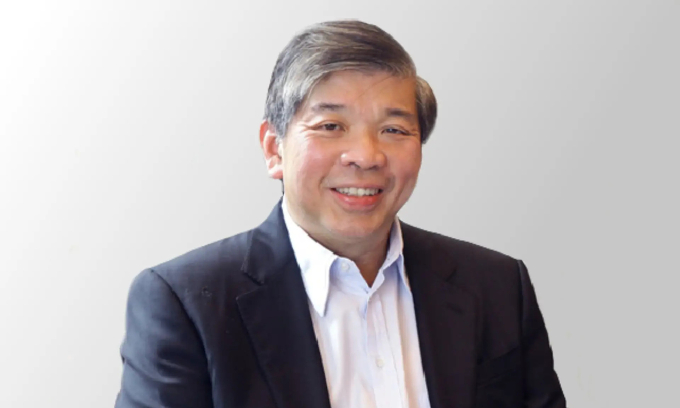
The indictment, filed in January and unsealed earlier this week, named seven executives, including Teo, the CEO and chairman of container manufacturer Singamas Container Holdings.
The alleged scheme
The department claimed that in November 2019, some executives from China International Marine Containers (CIMC), Shanghai Universal Logistics Equipment, CXIC Group Containers and an unnamed co-conspirator met at CIMC’s headquarters in Shenzhen, where they agreed to hike prices by limiting their output.
Singamas and another unnamed firm allegedly joined the scheme later.
The DOJ alleged that by September 2020, the group had agreed to restrict production of standard dry containers for major global customers, including shipping lines, container lessors and logistics firms in markets such as the U.S., Europe and China.
Between 2022 and 2023, the companies then agreed to limit the total production volume, with Singamas marketing director Vick Nam allegedly presenting Teo with each company’s production quotas, according to the department.
“The multi-year conspiracy roughly doubled the prices of standard shipping containers between 2019 and 2021, increasing the container manufacturers’ profits approximately one hundredfold during the COVID-19 pandemic and global supply chain crisis,” the department said, as quoted by Channel News Asia.
The accused
One of the accused, Vick Ma, was arrested in France in April and is awaiting extradition to the U.S.
The other co-defendants beside Ma and Teo are: Mai Boliang, who served as CIMC’s president and CEO and later became its chairman in August 2020; Huang Tianhua, vice-president of CIMC; Wan Yongbo, general manager of CIMC’s Operation Management Centre; Li Qianmin, general manager of Shanghai Universal Logistics Equipment; and Zhang Yuqiang, CEO of CXIC.
Singamas said on Wednesday that neither the company nor Teo had received “any legal process or other legal documentation” from the department, according to The Straits Times.
It added that external legal advisers had been engaged and that business operations and day-to-day activities would continue as normal.
Billionaire heir
 |
|
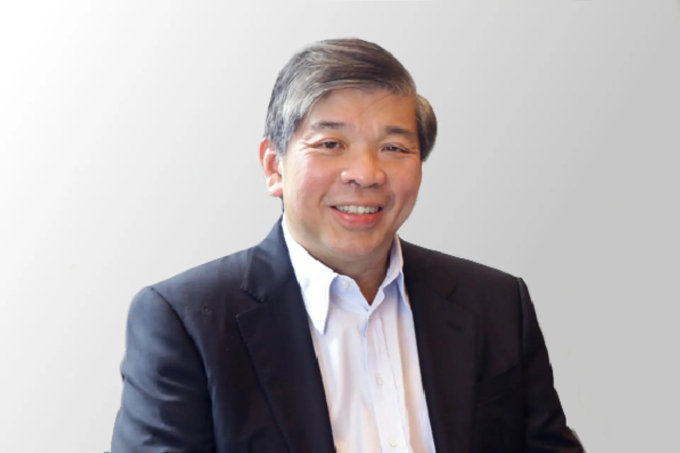
Teo Siong Seng, CEO and chairman of Singamas Container Holdings. Photo from Council for Board Diversity’s website |
Teo, born in 1954 in Singapore, is a son of late billionaire Chang Yun Chung, who founded Pacific International Lines (PIL), Singamas’ parent company.
Chang, also known as Teo Woon Tiong, began working in the shipping industry in 1949 before setting up PIL in 1967 with 10 investors.
Starting with two former Dutch ships operating routes to Jakarta and Bangkok, the company grew and became one of the first foreign shipping firms to operate in the Chinese market in the 1960s, per Forbes.
The Singapore-headquartered company expanded its fleet to more than 60 vessels within the next decade, serving China, the Arabian Gulf and East Africa. It later shifted to container shipping.
Chang became the world’s oldest billionaire in 2017 following the death of David Rockefeller. He made his final appearance on Forbes’ Singapore rich list in August 2020, ranking 40th with a net worth of US$875 million before his death later that year.
Taking over family business
Teo recalled in a social media video in January that his father introduced him to life at sea at age 13 by arranging for him to sail as a cadet.
The experience, he said, made him interested in maritime and convinced him to make shipping his career. He later graduated from University of Glasgow in 1979 with first-class honors in naval architecture and ocean engineering before joining PIL that same year.
Teo became PIL’s managing director in 1992 before succeeding his father as chairman in 2018. Under his leadership, the company expanded its container shipping business beyond southern Asia and built a presence in more than 100 countries.
Today, PIL is the world’s 12th-largest container ship operator, with a fleet of 106 vessels and a combined capacity of 443,154 20-foot equivalent units (TEUs), according to The Business Times.
Singamas, meanwhile, was founded in 1988 and listed in Hong Kong in 1993. The company is currently the world’s fourth-largest container manufacturer, with annual production capacity of about 270,000 TEUs.
PIL originally held a 51% stake in Singamas and remains the controlling shareholder despite its interest later falling below 50%.
Teo’s other roles
Beyond his family business, Teo holds several prominent positions in Singapore’s business community.
He serves as chairman of the Singapore Business Federation and, in that role, sits on the Singapore Economic Resilience Taskforce, which was set up to address the impact of U.S. tariffs on the city-state. He is also a board member of government agency Enterprise Singapore.
Singapore’s Ministry of Trade and Industry said last Friday that Teo will take a leave of absence from his roles at all three organizations to focus on addressing the indictment, according to Bloomberg, whichdescribed Teo as one of Singapore’s most prominent business figures.
Teo also heads the Singapore chapter of the ASEAN Business Advisory Council, serves as a pro-chancellor at the National University of Singapore, and is the Honorary Consul of Tanzania to Singapore.