This group, comprising managers, professionals and technicians and associate professionals, accounted for more than half of total retrenchments over those five years despite representing a smaller share of the workforce, the research house said, as reported by The Edge Malaysia on Thursday.
They also continued to be the most affected group in the first five months of this year.
Maybank said the trend could be partly attributed to the prevalence of voluntary separation schemes, mutual separation schemes and early retirement packages. These consistently ranked among the three leading causes of retrenchments during the period, the report said, as cited by Xinhua News Agency.
Higher-skilled employees may be more willing to take up such schemes, given the relatively attractive compensation offered and better prospects of finding another job, it added.
 |
|
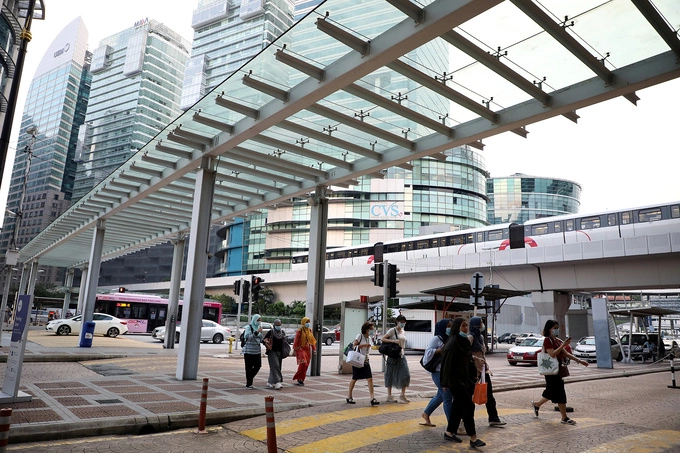
Office workers cross a street near the central business district in Kuala Lumpur, Malaysia, June 2, 2020. Photo by Reuters |
High-skilled workers made up 30.5% of Malaysia’s workforce as of the first quarter of 2026.
By comparison, semi-skilled workers, including clerical support staff, service and sales workers, skilled agricultural, forestry and fishery workers, craft and related trades workers, and plant and machine operators, accounted for 56.7%. The remaining 12.8% were low-skilled workers in elementary occupations.
Between January and June 12, a total of 42,807 workers were retrenched across Malaysia, with 40.85% of the job losses attributed to business closures and downsizing, the New Straits Times reported.
The manufacturing industry saw the highest number of retrenchments, at 8,702 or 20.7% of cases, as it was hit by rising domestic operating costs and weak global demand, which continued to weigh on supply chains.
Wholesale and retail trade was the second most affected sector with 7,560 retrenchments, followed by the administrative and support services sector with 4,239.
Sourcee.vnexpress.net